A laundry room can be one of the hardest working spaces in a home, but it is often designed as an afterthought. The washer and dryer are installed, a wire shelf is added above them, and everything else has to find a place later. Detergent, towels, cleaning supplies, pet items, sports uniforms, extra paper goods, ironing tools and seasonal storage can quickly turn the room into a cluttered pass-through.
For homeowners in Cumming GA, especially in busy family homes around Forsyth County, Vickery, Lake Lanier, Midway and nearby communities, a laundry room can do much more than handle laundry. With the right cabinet plan, it can become a practical utility zone, a folding station, a mudroom extension, a cleaning supply center and a hidden storage area that supports daily routines.
This guide explains how to plan laundry room cabinets in Cumming GA, what storage features matter most, how to coordinate cabinets with countertops and utility needs, and when custom cabinetry is worth considering for a laundry or mudroom-style space.
Why Laundry Room Cabinets Matter
Laundry rooms collect more categories than many homeowners expect. There are products used every day, products used once a month, items that need to stay away from children, items that should be easy to grab, and bulky items that do not fit neatly into standard shelves. Without cabinets, everything stays visible. Without the right cabinets, the room may look finished but still feel frustrating.
Cabinets bring order to the room because they create zones. Detergents can live near the washer. Towels can have their own cabinet. Cleaning supplies can be stored behind doors. Baskets can slide into open cubbies. A countertop can create a folding area. Tall cabinets can hide mops, brooms and vacuum attachments. The result is not only a better looking laundry room; it is a room that works faster.
In many Cumming homes, the laundry room is also close to the garage, kitchen or family entry. That makes it a natural place for backpacks, shoes, jackets, pet leashes or sports gear. When laundry cabinets are planned with those habits in mind, the room can support the whole household instead of becoming another clutter zone.
Laundry Room Cabinet Ideas Compared
| Cabinet feature | Best use | Why it helps |
|---|---|---|
| Upper cabinets | Detergent, stain removers, extra supplies | Keeps daily products hidden but close to the washer and dryer. |
| Tall utility cabinet | Mops, brooms, vacuum parts, ironing board | Stores awkward vertical items that do not fit in standard cabinets. |
| Base cabinets with countertop | Folding, sorting, baskets, pet care items | Adds a practical work surface and closed storage below. |
| Open cubbies | Laundry baskets, shoes, towels, kids’ items | Makes frequently used items easy to grab without opening doors. |
| Pull-out hamper | Sorting lights, darks, towels or delicates | Keeps laundry off the floor and supports faster wash routines. |
| Mudroom bench storage | Shoes, backpacks, jackets and family drop zone | Works well when the laundry room is near a garage or side entry. |
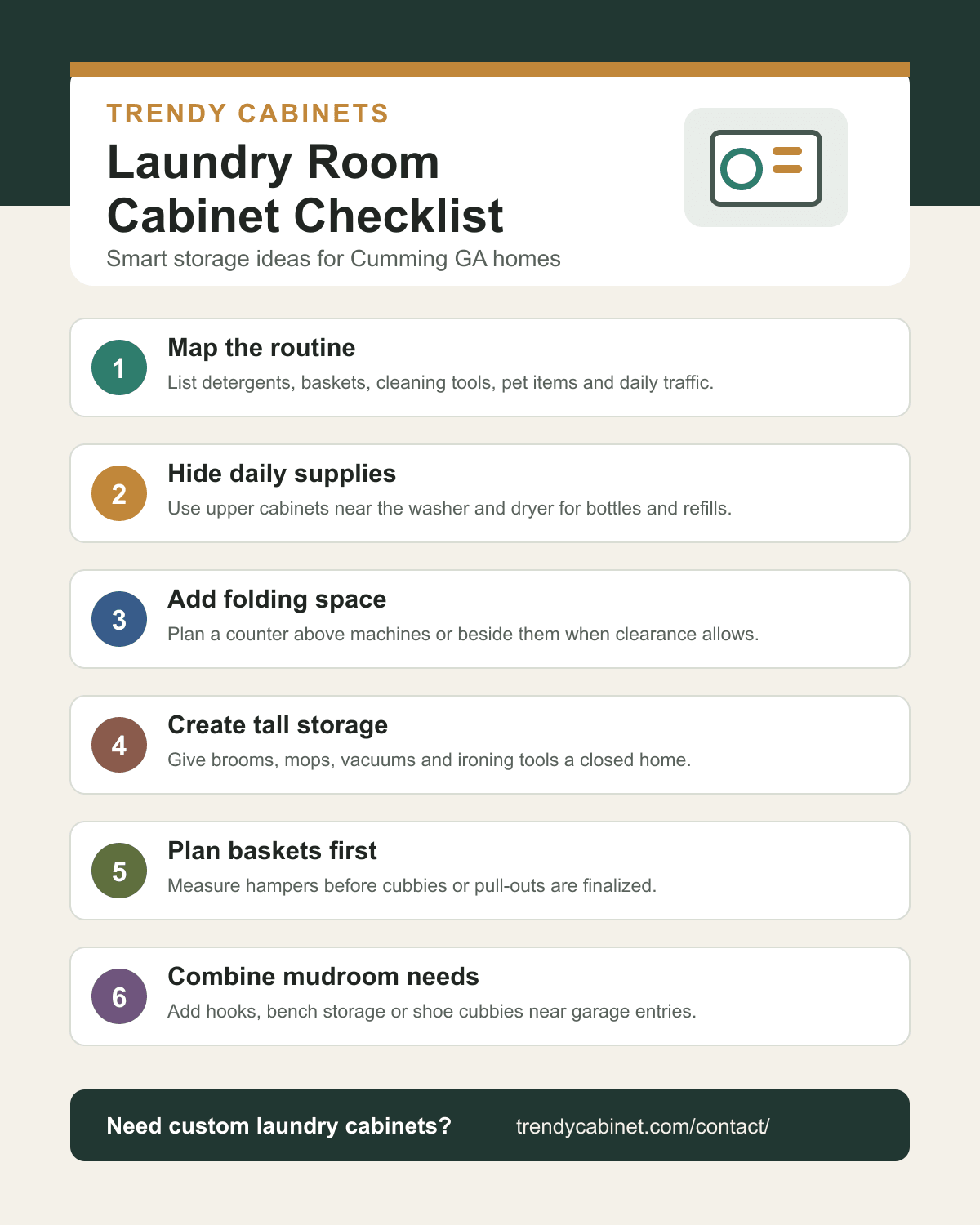
Start With the Daily Routine
The best laundry cabinet plan starts with how the room is actually used. Some families wash several loads every day. Others use the laundry room mostly on weekends. Some homeowners fold clothes in the laundry room, while others carry everything to a bedroom. Some need storage for cleaning products. Others need a pet feeding station, linen overflow or a mudroom bench.
Before choosing cabinet colors or door styles, it helps to list what needs to live in the room. That list might include detergent, fabric softener, stain spray, dryer sheets, cleaning sprays, paper towels, light bulbs, batteries, pet food, extra towels, bedding, laundry baskets, an iron, a steamer, vacuum accessories and seasonal items. Once the categories are clear, cabinet sizes make more sense.
This is where custom planning can be useful. A standard upper cabinet may be enough for a small laundry closet, but a larger utility room may need tall storage, mixed open and closed cabinets, a folding counter and basket storage. The design should follow the routine rather than forcing the routine to fit random cabinet boxes.
Upper Cabinets Keep Supplies Under Control
Upper cabinets are one of the simplest ways to make a laundry room feel more finished. They hide the bottles, boxes and cleaning items that otherwise sit on open shelves. They also keep supplies close to the washer and dryer, which makes daily use easier.
The key is placement. If cabinets are too high, smaller family members may not use them. If they are too deep, items can get lost in the back. Adjustable shelves help because laundry products and cleaning items come in different sizes. A cabinet above the washer may hold everyday products, while a side cabinet can hold less-used refills.
For a cleaner look, cabinets can extend across the washer and dryer wall. If the room has high ceilings, taller upper cabinets can add storage for seasonal items or extra household supplies. Crown molding or a simple trim detail can make the cabinetry feel built-in rather than added later.
Add a Folding Counter When Space Allows
A folding counter can change how the laundry room works. Instead of carrying clean clothes to another room, homeowners can sort, fold and organize in one place. A counter above front-load machines is one option. Another option is a base cabinet run with a countertop beside the washer and dryer.
Countertop material should fit the way the room is used. Quartz is a strong option for many laundry rooms because it is durable, easy to clean and available in designs that pair well with painted or wood cabinets. Laminate can be budget-friendly. Butcher block can add warmth, though it needs more care around moisture. The right choice depends on design goals, maintenance expectations and budget.
For homeowners who want the laundry room to feel connected to the kitchen or mudroom, cabinet color and countertop style can coordinate with nearby spaces. The laundry room does not have to match exactly, but it should feel intentional.
Use Tall Cabinets for Utility Storage
Tall cabinets are especially helpful in laundry rooms because many utility items are awkward to store. Mops, brooms, ironing boards, step stools, vacuum accessories and cleaning tools often end up leaning in corners. A tall utility cabinet gives those items a clean home behind a door.
Interior planning matters. A tall cabinet can include hooks, shelves, a broom holder, a narrow pull-out, or a divided section for upright tools. If the homeowner uses a cordless vacuum, the cabinet can be planned around charger access. If the room stores cleaning products, upper shelves can keep certain items out of easy reach.
In a Cumming family home where the laundry room connects to the garage, a tall cabinet can also support mudroom storage. It can hold umbrellas, reusable bags, sports gear, dog walking supplies or seasonal outdoor items. That kind of storage reduces clutter in the kitchen and entry areas.
Plan Hamper and Basket Storage
Laundry rooms often fail because baskets have nowhere to go. Clean laundry sits on the floor. Dirty laundry piles near the washer. Towels collect in a corner. Built-in hamper storage can make the room easier to reset.
Pull-out hampers are useful when the goal is to hide laundry. Open cubbies are useful when baskets need to move in and out quickly. A family may want separate baskets for lights, darks, towels, uniforms or delicates. The right solution depends on whether the homeowner prefers everything hidden or easy to access.
Basket dimensions should be planned before cabinets are finalized. A beautiful cubby is not useful if the household’s baskets do not fit. Measuring the baskets, hampers and bins that will be used every week prevents small annoyances after installation.
When a Laundry Room Becomes a Mudroom
Many Cumming GA homes have laundry rooms near the garage entry. That creates an opportunity to combine laundry storage with mudroom storage. A bench, hooks, shoe cubbies, upper cabinets and closed storage can turn the room into a family landing zone.
This is especially helpful for households with school bags, sports equipment, jackets and shoes moving in and out every day. A mudroom-style cabinet wall can reduce clutter at the kitchen island or entry hallway. It also makes the laundry room feel like part of the home’s organization system rather than only a utility space.
The trick is balance. A laundry room still needs enough clearance for washer doors, dryer doors, baskets and movement. A bench that is too deep can make the room feel tight. Hooks placed in the wrong area can interfere with cabinet doors. The layout should be measured around real traffic patterns.
Cabinet Finishes for Laundry Rooms
Laundry rooms can be bright, calm and practical. White cabinets keep the room clean and open. Soft gray, warm beige, navy, muted green or natural wood can add personality. If the laundry room is small or windowless, lighter finishes usually help the space feel more open.
Door style also matters. A simple shaker door works well in many homes because it feels classic without being too decorative. Slab doors can create a clean modern look. Inset or more detailed doors can make a laundry room feel like a custom extension of the rest of the home.
Hardware should be easy to grip. Laundry rooms are work spaces, so small delicate knobs may not be the best choice for every cabinet. Pulls are often practical for drawers, hampers and tall cabinet doors. The finish can coordinate with kitchen hardware, bathroom fixtures or nearby mudroom details.
Lighting, Outlets and Clearance
Cabinet planning should consider more than storage. Laundry rooms need good lighting, safe outlet placement and enough clearance to use appliances comfortably. If upper cabinets are installed above machines, the doors should open without hitting lights, shelves or nearby walls. If a countertop is added above front-load machines, appliance height and vibration should be considered.
Outlets are important for irons, steamers, cordless vacuums, chargers or a countertop work zone. If the laundry room will include a pet station or utility sink, plumbing and moisture should also influence material choices. A cabinet near a sink may need a different interior plan than a dry storage cabinet.
Good design prevents small frustrations. The washer door should open fully. The dryer vent should remain accessible. The water shutoff should not be buried behind permanent cabinetry. A professional design conversation can catch these details before cabinets are ordered.
Common Laundry Room Cabinet Mistakes
One common mistake is adding only upper cabinets and ignoring the lower half of the room. Upper cabinets help, but a folding counter, base storage, hampers or open basket zones may be more useful for daily routines. Another mistake is using open shelving for everything. Open shelves look simple, but laundry products and cleaning supplies rarely stay photo-ready.
Another mistake is forgetting tall storage. Without a place for brooms, mops and ironing tools, the room still feels cluttered even after cabinets are installed. Homeowners should also avoid choosing cabinet layouts without checking appliance clearances. Washer and dryer doors, pedestal drawers, water connections and vents can affect what fits.
Finally, some laundry rooms are designed without enough landing space. A small counter, even a short one, can make sorting and folding easier. If a full counter is not possible, a pull-out shelf or a narrow work surface may still help.
Laundry Room Planning Checklist
| Planning question | Why it matters |
|---|---|
| Will the room be laundry-only or laundry plus mudroom? | This determines whether benches, hooks and shoe storage should be included. |
| Do you fold clothes in the laundry room? | If yes, counter space should be part of the cabinet plan. |
| What needs to be hidden? | Cleaning supplies, detergent, tools and refills may need closed cabinets. |
| How many baskets are used weekly? | Basket and hamper storage should match the household’s routine. |
| Are there pets, kids or sports gear involved? | Extra zones may be needed for leashes, towels, uniforms or supplies. |
| Where are outlets, plumbing and vents? | Cabinet design should protect access and avoid appliance conflicts. |
How Custom Cabinets Help in Cumming Homes
Custom cabinets are useful when the laundry room has unusual dimensions, tight clearances, high ceilings, a sloped wall, a side entry, a utility sink or mixed storage needs. Instead of forcing standard cabinets into the room, custom planning can shape the cabinetry around the space.
For some homeowners, that means a simple wall of uppers and a folding counter. For others, it means a full cabinet system with tall storage, hampers, mudroom bench seating, open cubbies and countertop work space. The value comes from designing the room around real use.
If the laundry room sits near a kitchen, pantry, garage or closet area, the design can also support the larger storage plan of the home. A laundry cabinet project may connect naturally with cabinet planning, custom closet storage, countertop selections and broader remodeling decisions.
How Trendy Cabinets Can Help
Trendy Cabinets helps homeowners think through storage, cabinet construction, finish selection, countertop coordination and installation details together. A laundry room may be smaller than a kitchen, but it still deserves a careful plan. When the cabinet layout supports the way the family lives, the room becomes easier to use every day.
If you are planning laundry room cabinets in Cumming GA or nearby communities, start by listing what the room needs to store and how your household uses the space. Then compare cabinet options, countertop materials, tall storage, basket zones and mudroom features with a design team that can turn those needs into a practical layout. To begin, contact Trendy Cabinets and schedule a consultation.
Related Cabinet Planning Guides
If you are comparing laundry storage with other cabinet projects, these Trendy Cabinets guides can help you plan the next step:
- Small Kitchen Storage Ideas for Atlanta Homes
- Pantry Cabinets in Roswell GA
- Kitchen Cabinet Refacing vs. Replacement in Atlanta
- Frameless vs. Inset Cabinets in Atlanta
- Quartz vs. Granite Countertops in Atlanta Kitchens
Frequently Asked Questions
Are custom laundry room cabinets worth it?
Custom laundry room cabinets can be worth it when the room has tight dimensions, mixed storage needs, a mudroom entry, tall utility items, or a need for built-in hampers and folding space.
What cabinets work best above a washer and dryer?
Upper cabinets with adjustable shelves work well above a washer and dryer because they keep detergents, refills and cleaning supplies hidden but close to the machines.
Can a laundry room also work as a mudroom?
Yes. If the laundry room is near a garage or side entry, it can include bench seating, hooks, shoe cubbies, tall cabinets and basket storage to support daily family routines.
Final Thoughts
A well-designed laundry room can make the entire home feel more organized. Cabinets help hide supplies, create folding space, control baskets, store cleaning tools and support mudroom routines. For Cumming GA homeowners, the best laundry cabinet design starts with real household habits and turns them into a room that works quietly every day.