Luxury kitchen cabinets are not defined by one color, one door style or one trend. The finish is what gives the kitchen its personality. A cabinet finish can make a room feel warm, calm, dramatic, traditional, modern, architectural or quietly refined. It also affects how the kitchen photographs, how it feels under different lighting, how easy it is to maintain and how well the cabinets work with countertops, backsplash, flooring and hardware.
For Atlanta homeowners planning a high-end kitchen, cabinet finish selection is one of the most important design decisions in the entire remodel. The right finish can make a large kitchen feel balanced. It can make an older home feel updated without losing character. It can make a new construction kitchen feel more custom. It can also help a kitchen connect visually with open living spaces, dining areas, butler’s pantries, wet bars and mudroom cabinetry.
This guide explains how to choose luxury kitchen cabinet finishes in Atlanta, including matte painted cabinets, walnut, white oak, stained wood, two-tone layouts, inset detail, frameless modern finishes, hardware pairings and countertop coordination. It is written for homeowners who want a kitchen that feels elevated, practical and personal rather than copied from a showroom display.

Why Cabinet Finish Matters in a Luxury Kitchen
In a luxury kitchen, the cabinets are usually the largest visual surface in the room. They surround the perimeter, shape the island, frame the appliances and define the storage zones. Because cabinets occupy so much space, the finish has a stronger effect than almost any other design choice. A white oak finish can make the kitchen feel warm and organic. A deep painted finish can create drama. A soft white can keep the room bright. A walnut island can add depth. A matte finish can calm down a large space with strong natural light.
Finish also changes how expensive the kitchen feels. A high-end cabinet layout can lose impact if the color feels flat, the sheen is wrong, or the finish fights with the surrounding surfaces. On the other hand, a well-chosen finish can make simple lines feel intentional and custom. The finish is where cabinet construction, room architecture and personal style meet.
Atlanta homes vary widely. A Buckhead home may call for a refined transitional finish with inset details. A modern Sandy Springs home may need slab doors, walnut tones and quiet hardware. A Roswell or Milton kitchen may need warmth, texture and storage-focused design. A newer open-plan home may need a finish palette that connects the kitchen to the family room without making the whole space feel one-note. The best cabinet finish is not just beautiful by itself. It belongs to the home.
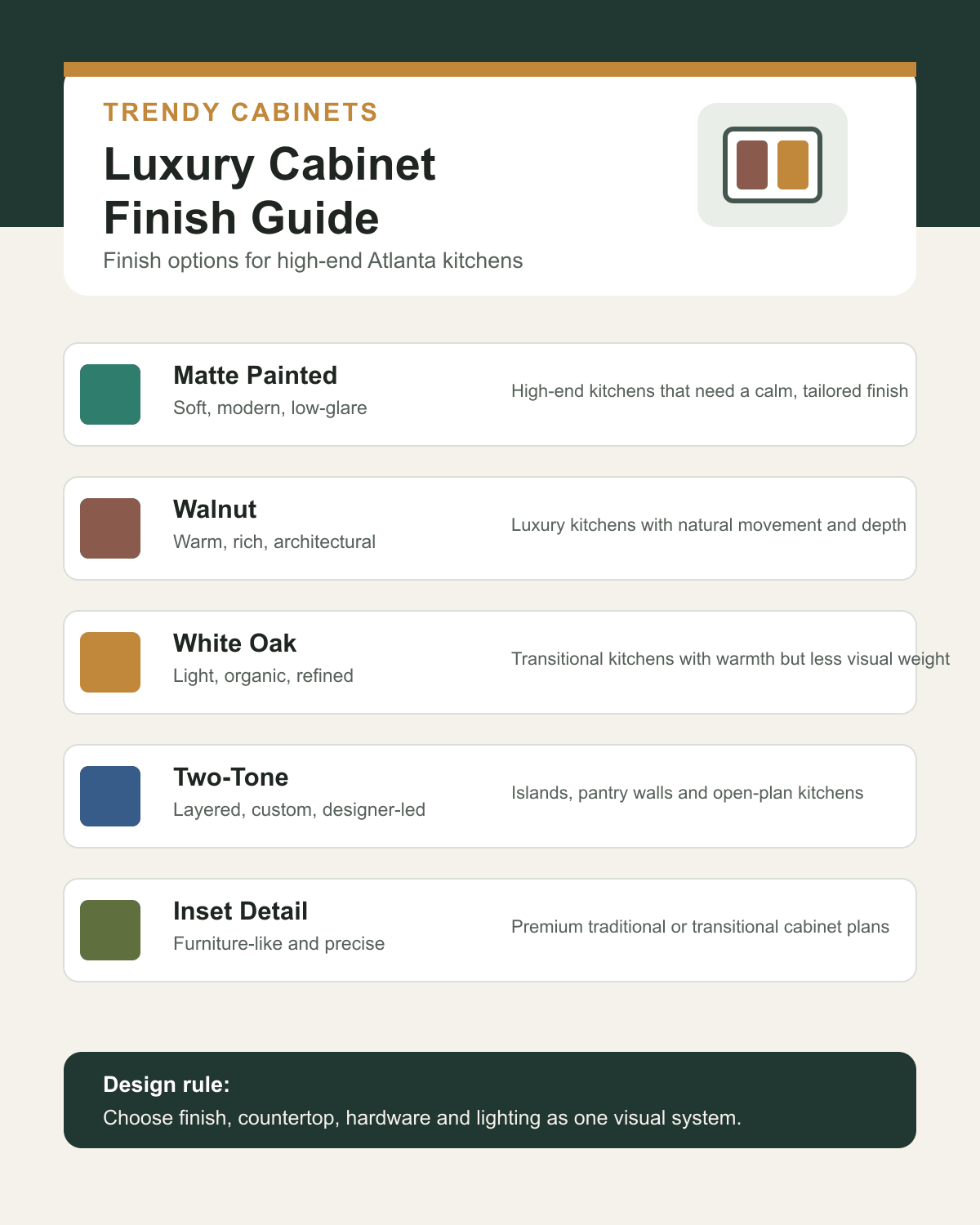
Luxury Cabinet Finish Options at a Glance
| Finish option | Best for | Design effect | Planning note |
|---|---|---|---|
| Matte painted cabinets | Modern, transitional and calm kitchens | Soft, low-glare and tailored | Works well with bright rooms and statement countertops. |
| Walnut cabinets | Warm luxury kitchens and statement islands | Rich, natural and architectural | Needs thoughtful lighting so the room does not feel too dark. |
| White oak cabinets | Organic modern and transitional kitchens | Warm, clean and lighter than walnut | Grain direction and stain tone should be reviewed carefully. |
| Two-tone cabinetry | Large kitchens, islands and open layouts | Layered, custom and designer-led | Best when one finish clearly leads and the other supports. |
| Inset painted cabinets | Classic luxury kitchens | Furniture-like, precise and refined | Requires careful alignment and a premium construction approach. |
| Dark painted cabinets | Dramatic islands, bars and formal kitchens | Bold, grounded and elegant | May show dust or fingerprints depending on sheen and use. |
Start With the Home, Not the Trend
Luxury design begins with context. Before choosing a finish, look at the home itself. Is the architecture traditional, transitional, modern, European-inspired, farmhouse-influenced or contemporary? Are there dark floors, warm floors or pale floors? Does the kitchen open into a living room? Are there beams, built-ins, stone fireplaces, large windows or existing wood tones nearby? Cabinet finish should respond to these elements.
A finish that looks beautiful in a bright showroom can feel different in a real home. Atlanta kitchens often receive shifting natural light throughout the day. Morning light may make a white cabinet look crisp. Afternoon light may warm the same finish. A north-facing kitchen may make gray or blue undertones feel cooler. A wooded lot may cast green tones into the room. That is why samples should be reviewed in the actual space whenever possible.
Trend awareness can help, but it should not control the project. Matte finishes, white oak, warm walnut, mushroom tones, deep greens and two-tone kitchens are popular for good reasons. Still, the goal is not to chase what is popular. The goal is to choose a finish that works with the house, the household and the surfaces around it. A luxury kitchen should still feel right years after the remodel is complete.
Matte Painted Cabinets
Matte painted cabinets are a strong option for homeowners who want a quiet, refined kitchen. The lower sheen reduces glare and gives the cabinetry a softer, more architectural look. Matte finishes can feel modern without being cold, especially when paired with natural stone, warm wood accents, brushed brass hardware or textured tile.
Soft white, warm gray, taupe, mushroom, muted green, deep navy and charcoal can all work in a matte finish. The key is undertone control. A white that is too cool may feel stark. A gray with too much blue may feel cold under certain lighting. A beige or greige with the wrong undertone may clash with flooring. Luxury painted finishes should be sampled next to countertop slabs, backsplash tile and flooring, not selected from a tiny swatch in isolation.
Matte finishes also need a realistic maintenance conversation. A very flat finish can show rub marks differently than a satin finish. High-touch areas around pulls, trash pull-outs and dish drawers may need more cleaning. That does not mean matte is a bad choice. It simply means sheen should be selected based on both the desired look and daily use.
Walnut Cabinets
Walnut is one of the most recognizable luxury cabinet finishes. It brings warmth, movement and natural variation to a kitchen. Walnut can feel modern when used on slab doors, classic when used with detailed cabinetry, and dramatic when used for an island or full pantry wall. It is especially effective when the homeowner wants the kitchen to feel rich without relying on a dark painted color.
Because walnut has strong character, it needs balance. Too much walnut in a dark room can feel heavy. Too little walnut may feel like an accent rather than a design direction. In many Atlanta kitchens, walnut works beautifully as an island finish, a tall pantry wall, a coffee bar, a wet bar or a lower cabinet run paired with lighter uppers. It can also work across the entire kitchen when the room has enough light, ceiling height and visual breathing space.
Walnut pairs well with white or warm stone countertops, soft white perimeter cabinets, black or brass hardware, and simple backsplash materials. It also pairs well with a restrained cabinet door style. Since the wood already brings movement, the door profile does not need to work too hard. For homeowners comparing premium cabinet construction and style, the existing guide to frameless vs. inset cabinets in Atlanta is a helpful companion.

White Oak Cabinets
White oak has become a favorite finish for luxury kitchens because it gives warmth without the depth of walnut. It feels natural, calm and high-end, especially in kitchens that lean organic modern, transitional or Scandinavian-inspired. White oak can soften stone countertops, warm up white walls and make a kitchen feel custom without becoming visually heavy.
The details matter. White oak can look very different depending on cut, stain, grain direction and finish. Rift-cut or quarter-sawn white oak often feels cleaner and more refined than a busier grain pattern. A pale stain can feel airy. A warmer stain can feel more traditional. A finish with too much yellow or orange can date the kitchen quickly. A finish that is too gray can feel washed out if the rest of the home is warm.
White oak works well for full kitchens, islands, pantry walls, floating shelves, vanities and built-ins. It also plays nicely with two-tone designs. A white oak island with painted perimeter cabinets can feel warm and balanced. White oak lowers with painted uppers can make the room feel grounded without losing brightness. The right combination depends on the home’s light and the homeowner’s appetite for contrast.
Two-Tone Luxury Kitchens
Two-tone cabinetry can make a kitchen feel more custom, but it must be planned carefully. The most common approach is a painted perimeter with a wood island. Another option is light upper cabinets with darker lower cabinets. A third option is a full-height pantry wall in one finish and the main kitchen in another. Two-tone design works best when the finishes have a clear relationship rather than competing for attention.
A good two-tone kitchen has a dominant finish and a supporting finish. If both finishes are equally loud, the kitchen can feel busy. If the contrast is too weak, the design may look accidental. The island is often the safest place to introduce contrast because it is naturally a focal point. A walnut, navy, charcoal, white oak or deep green island can give the kitchen presence while the perimeter remains lighter and calmer.
Countertops and hardware should connect the two finishes. For example, a warm white perimeter and walnut island may need a countertop with subtle warmth rather than a cold gray surface. A deep green island may work better with aged brass hardware than polished chrome. A black island may need lighting and backsplash choices that prevent the room from feeling too stark.
Inset Cabinet Finishes
Inset cabinets are often associated with luxury kitchens because the doors and drawers sit within the face frame rather than overlaying it. This creates a precise, furniture-like look. Inset cabinetry can feel classic, transitional or even modern depending on door style and finish. Painted inset cabinets are especially popular in high-end kitchens because they show craftsmanship clearly.
Finish selection is important with inset cabinets because the details are more visible. A soft painted finish can highlight the lines without making the kitchen feel busy. A darker painted finish can feel formal and dramatic. A wood inset kitchen can be beautiful, but the grain, door style and trim details need to be carefully balanced so the room does not feel overly traditional unless that is the goal.
Inset cabinets are not the right answer for every home, but when the architecture supports them, they can create a deeply polished look. They often pair well with paneled appliances, custom hood details, furniture-style islands, built-in hutches and refined hardware. Homeowners comparing inset with other cabinet styles may also want to review Inset vs. Frameless vs. Shaker Cabinets before finalizing the direction.
Dark Painted Cabinets
Dark painted cabinets can make a luxury kitchen feel grounded, formal and memorable. Navy, charcoal, black, deep green and espresso-inspired tones all have a place in high-end design. These finishes work especially well for islands, bars, butler’s pantries, coffee stations and large kitchens where a lighter palette needs contrast.
The challenge with dark cabinets is balance. A dark finish can absorb light, show dust, reveal fingerprints or make a small room feel smaller if it is used without enough contrast. That does not make dark cabinetry impractical. It simply means the room needs the right lighting plan, hardware finish, countertop material and wall color. A dark island under strong pendant lighting can look beautiful. A dark full kitchen with poor lighting can feel heavy.
Dark finishes often look best with either very simple doors or very intentional traditional details. A slab door in a dark matte finish can feel sleek and modern. A dark inset cabinet can feel classic and formal. A dark shaker door can sit between the two. The key is not only the color, but the way the door style and sheen support the color.
Warm Whites and Soft Neutrals
White kitchens are still relevant in luxury design, but the best versions are rarely flat, cold or builder-basic. High-end white kitchens usually use layered whites, warm undertones, beautiful trim, thoughtful lighting and rich surfaces. A soft white cabinet finish can keep the room bright while still feeling custom. Warm white, cream, ivory, linen, putty and mushroom tones can all create a more refined look than a stark white finish.
Soft neutrals are especially useful in Atlanta homes where the kitchen opens into living spaces. A strong cabinet color might dominate the room, while a warm neutral can blend more naturally with upholstery, flooring, fireplaces and built-ins. These finishes also work well when the homeowner wants the countertop, island or lighting to become the focal point.
The risk is choosing a neutral that is almost right but not quite. A cream cabinet can look yellow next to a cool quartz. A gray cabinet can look blue next to warm floors. A beige cabinet can look flat if the backsplash has the wrong undertone. This is why finish samples should be viewed next to every major surface, not only under showroom lighting.
Hardware Pairings for Luxury Cabinet Finishes
Hardware is the jewelry of the kitchen, but in a luxury design it should do more than decorate. It should support the finish and make the cabinets easy to use. Brushed brass can warm up white, green, navy and walnut finishes. Polished nickel can bring a classic feel to inset painted cabinets. Matte black can sharpen white oak or painted finishes. Bronze can add depth to warmer palettes.
Scale matters. Large drawers often need longer pulls. Tall pantry doors may need substantial hardware. Appliance panels may require appliance pulls rather than standard cabinet pulls. Small knobs can look elegant on upper doors, but they may feel too delicate on heavy drawers. A beautiful kitchen can feel less functional if hardware is chosen only by appearance.
Hardware should also coordinate with lighting, plumbing fixtures and appliance finishes. It does not have to match perfectly, but it should feel intentional. Mixed metals can work well in a luxury kitchen when one metal leads and the other supports. For example, brass cabinet hardware can pair with black lighting or polished nickel plumbing if the overall palette is balanced.
Countertop and Backsplash Coordination
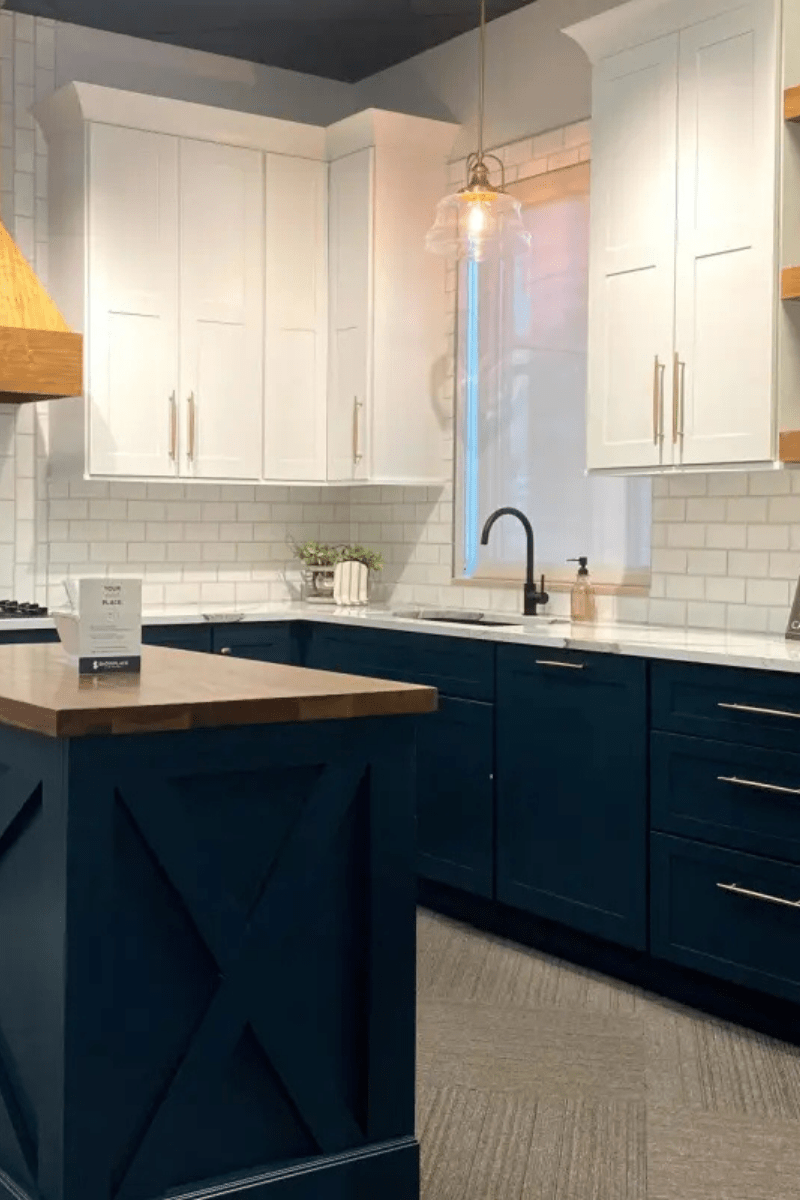
Cabinet finish should never be chosen separately from countertops and backsplash. These three surfaces create the visual language of the kitchen. A dramatic stone countertop may need quieter cabinets. A subtle countertop may allow a richer cabinet finish. A patterned backsplash may need simpler cabinet color. A handmade tile may look best with a finish that feels warm and natural.
Luxury kitchens often succeed because the materials are edited. Not every surface needs to be the star. If the cabinet finish is walnut, the countertop may need to be calm. If the countertop has strong veining, the cabinet finish may need to be more restrained. If the backsplash is textured or handmade, the cabinet finish should support the texture rather than fight it.
For homeowners comparing surface choices, Trendy Cabinets already has guides on kitchen backsplash ideas for Atlanta remodels and quartz vs. granite countertops in Atlanta kitchens. These are helpful companion reads because cabinet finish decisions become easier when the surrounding surfaces are part of the same plan.
Lighting Changes Everything
Lighting can make or break a cabinet finish. Natural light, recessed lights, under-cabinet lighting, pendants and decorative fixtures all change how a finish appears. A soft white cabinet may look warm during the day and cooler at night. Walnut may look rich under warm lighting and flat under poor lighting. A deep green finish may look elegant in daylight and nearly black in a dim room.
When planning luxury cabinets, lighting should be discussed before cabinets are ordered. Under-cabinet lighting can make countertops more usable and show backsplash texture. Interior lighting can elevate glass cabinets or display storage. Pendants can influence how an island finish reads. Even bulb temperature matters. Warm lighting can enrich wood finishes, while cooler lighting can sharpen modern painted finishes but may make warm neutrals look off.
Samples should be reviewed under the lighting conditions the kitchen will actually have. If the remodel includes new lighting, cabinet finish and lighting should be coordinated together. This is especially important in Atlanta homes with large windows, shaded lots, wooded views or open-plan rooms where lighting varies by zone.
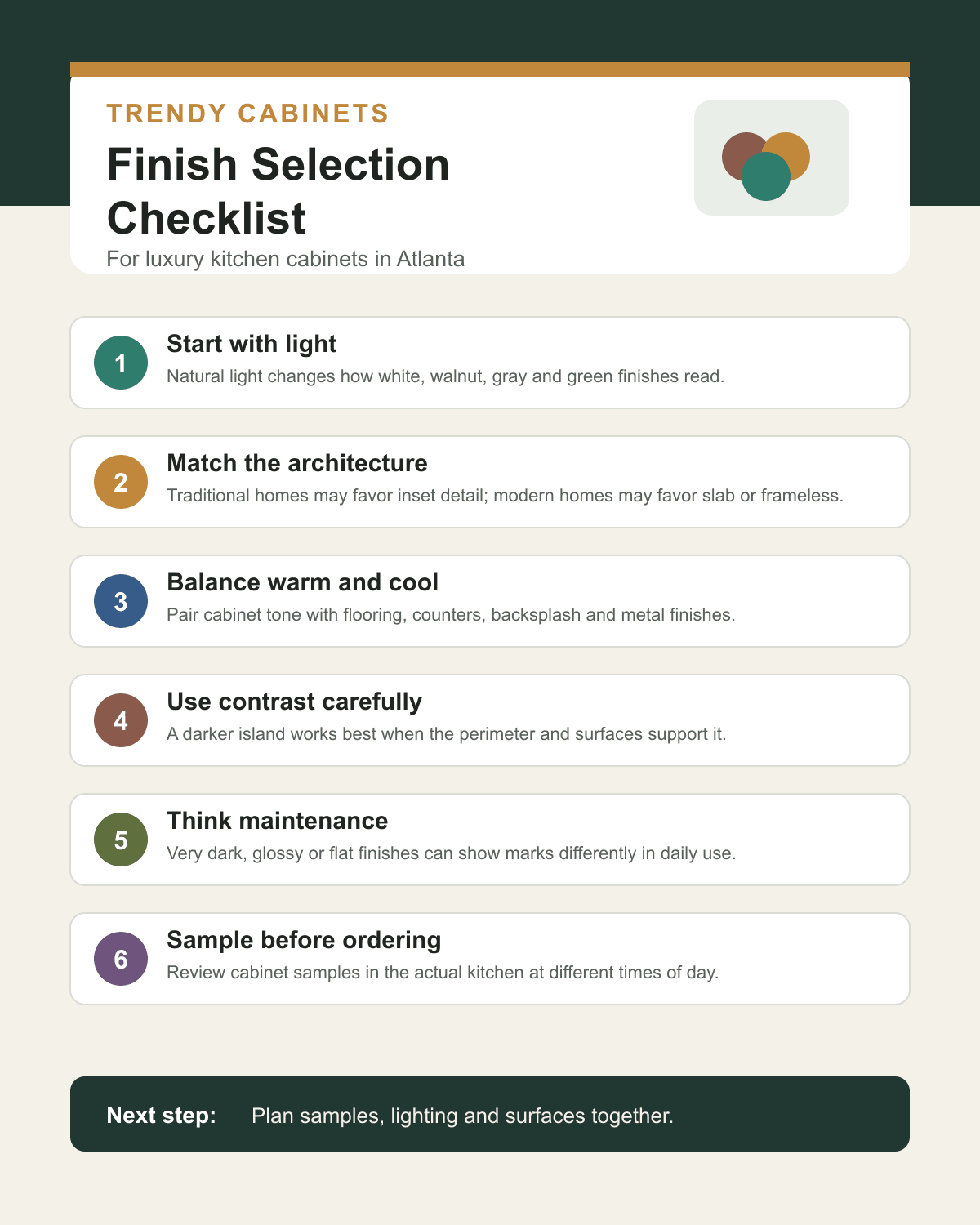
Finish Selection Checklist
A finish that looks good on a sample board still needs to pass a real-life checklist. It should support the architecture, work with the light, pair with countertops, fit the household’s maintenance expectations and feel appropriate for the long-term value of the home. The best finish is not only the most beautiful option. It is the option that still feels right after cooking, cleaning, hosting and daily family routines.
Common Finish Mistakes to Avoid
One common mistake is selecting the cabinet finish before the countertop. Cabinets and countertops sit directly next to each other, so undertones matter. A cabinet color that looks warm on its own may clash with a cool countertop. A stone with strong veining may overpower a busy wood finish. These choices need to be seen together.
Another mistake is choosing a finish only from online inspiration photos. Photos are useful for direction, but they can be edited, filtered or taken under lighting that is nothing like the homeowner’s kitchen. A finish that looks perfect online may look too yellow, too gray, too dark or too flat in the actual room. Inspiration should guide the conversation, not replace samples.
A third mistake is ignoring maintenance. Some finishes show dust. Some show fingerprints. Some show scratches more easily. Some are easier to touch up than others. A luxury kitchen should be beautiful, but it should also be realistic for the household. A family that cooks every day may need a different sheen and hardware strategy than a household that uses the kitchen mainly for entertaining.
Finally, many homeowners choose too many focal points. Dark cabinets, dramatic stone, bold tile, ornate hardware and statement lighting can all be beautiful, but not all at once. High-end design often feels expensive because it is edited. One or two features lead; the rest support.
How Finish Affects Perceived Value
Cabinet finish affects perceived value because buyers and guests notice it quickly. A finish can make cabinetry feel custom, current and well planned. It can also make expensive cabinets feel dated if the color, sheen or undertone is wrong. This does not mean every homeowner should choose a safe white kitchen. It means the finish should feel intentional, durable and connected to the home.
Natural wood finishes often communicate quality because they show material character. Painted finishes can communicate quality when the color is refined and the construction details are strong. Two-tone kitchens can communicate custom design when the contrast is balanced. Inset cabinets can communicate craftsmanship when the finish highlights the precision of the doors and drawers.
If resale value is a concern, avoid finishes that feel too specific to a short trend. A deep color can still be resale-friendly if it is used on an island or bar rather than every cabinet. A wood finish can feel timeless if the tone is not too orange or too gray. A neutral finish can feel custom if it has warmth, depth and strong details.
Luxury Finishes for Islands
The island is often the best place to introduce a luxury finish. Because it sits in the center of the room, it can handle more personality than the perimeter. A walnut island can warm up white cabinets. A deep green island can add character. A navy island can feel classic. A white oak island can soften a modern kitchen. A black or charcoal island can ground a large open space.
Island finish should be selected with the countertop in mind. A waterfall countertop may cover much of the side panels, which changes how visible the cabinet finish will be. A thick countertop edge can make a dark island feel more substantial. A light countertop can brighten a dark island. Seating overhangs, pendant lighting and nearby flooring also affect how the island finish reads.
Because islands are high-use areas, durability matters. Kids, guests, barstools, bags and daily cooking can all touch the island. Hardware placement, sheen and panel detail should be chosen with that traffic in mind. A beautiful island should not require the homeowner to worry every time someone sits down.
Luxury Finishes for Pantry Walls and Built-Ins
Pantry walls, appliance walls and built-ins are excellent places to use a distinctive finish. A tall wall of cabinetry can become an architectural feature. It can hide appliances, create storage, frame a coffee station or connect the kitchen to a dining area. In a luxury kitchen, these zones often make the room feel more custom than standard upper and lower cabinets alone.
A pantry wall in walnut or white oak can create warmth. A painted pantry wall can blend into the architecture. Glass doors can break up a long cabinet run, but they should be used carefully because they introduce visibility and maintenance. Appliance panels should match or coordinate with the cabinet finish so the wall feels integrated rather than interrupted.
If storage is a major goal, finish should work with interior planning. A beautiful pantry wall still needs roll-out trays, adjustable shelves, drawer storage, appliance garages or vertical dividers where appropriate. For more functional planning ideas, see the guide to pantry cabinets and tall cabinet storage.
Choosing Finishes for Open-Plan Homes
Many Atlanta kitchens open into living rooms, breakfast areas or dining spaces. In these homes, the cabinet finish must work beyond the kitchen. A color that looks good on the cabinet wall may feel too strong when viewed from the sofa. A wood tone may need to coordinate with flooring, built-ins, ceiling beams or furniture. Hardware may need to connect with lighting in nearby rooms.
Open-plan homes often benefit from softer, more layered finishes. White oak, warm white, mushroom, walnut accents and muted painted colors can help the kitchen feel connected to the rest of the home. Stronger colors can still work, but they should be placed strategically. An island, bar or pantry zone may be a better location for a bold finish than the entire perimeter.
Finish transitions also matter. If a kitchen opens to a family room with built-in cabinetry, the finishes should either coordinate or intentionally contrast. Matching everything can feel flat. Using unrelated finishes can feel chaotic. A thoughtful palette creates continuity without making every cabinet in the home look identical.
How to Work Through Samples
Samples are one of the most important steps in finish selection. A homeowner should review cabinet samples with countertop samples, backsplash options, flooring and hardware. The samples should be checked in morning light, afternoon light and evening artificial light. If possible, place the sample vertically because cabinet doors are vertical surfaces. A sample lying flat on a counter may read differently.
It is also helpful to compare finishes against white paper or a neutral background. This makes undertones easier to see. A warm white may reveal yellow, pink or beige undertones. A gray may reveal blue, green or purple undertones. Wood stains may reveal orange, red, gray or brown undertones. These undertones become more obvious when materials are placed together.
Do not rush the sample phase. Once cabinets are ordered, finish changes can be expensive or impossible. A few extra days reviewing samples can prevent years of regret. This is especially true for luxury projects where the cabinet investment is significant and the finish sets the tone for the whole room.
Related Cabinet Planning Guides
If you are planning a luxury kitchen cabinet project, these related Trendy Cabinets guides can help with style, budget, storage and surface decisions:
- Inset vs. Frameless vs. Shaker Cabinets in Atlanta
- Frameless vs. Inset Cabinets in Atlanta
- Custom Cabinet Costs in Atlanta
- The Ultimate Guide to Atlanta Custom Cabinetry
- Kitchen Backsplash Ideas for Atlanta Remodels
- Quartz vs. Granite Countertops in Atlanta Kitchens
How Trendy Cabinets Can Help
Trendy Cabinets helps homeowners choose cabinet finishes as part of a complete kitchen plan. That means looking at the room layout, cabinet construction, storage needs, countertop options, hardware, lighting and installation details together. The finish is not treated as a separate paint color decision. It is part of the full design system.
If you are planning luxury kitchen cabinets in Atlanta, start by collecting inspiration images, noting what you like about each one and identifying the finishes that appear repeatedly. Then compare those ideas with your actual home: the lighting, architecture, floors, adjacent rooms and daily use. A design conversation can help narrow the options and prevent a beautiful sample from becoming the wrong choice in the room.
To begin planning a luxury cabinet finish, contact Trendy Cabinets and schedule a consultation. Bring photos of your kitchen, rough measurements, appliance plans and any finishes you are considering. The more context the design team has, the easier it is to recommend a finish direction that feels custom, durable and right for your home.
Frequently Asked Questions
What cabinet finish looks most luxurious?
Walnut, white oak, refined matte painted finishes, inset painted cabinets and balanced two-tone designs can all look luxurious when they fit the home and are coordinated with countertops, hardware and lighting.
Are white kitchen cabinets still considered high-end?
Yes. White kitchen cabinets can still feel high-end when the finish has the right undertone, the cabinet construction is strong and the design includes quality hardware, surfaces, lighting and trim details.
What is the best wood finish for a luxury kitchen?
Walnut and white oak are two of the strongest wood finish options for luxury kitchens. Walnut feels rich and dramatic, while white oak feels lighter, warm and organic.
Should a luxury kitchen use two cabinet finishes?
A luxury kitchen can use two cabinet finishes if the contrast is intentional. A wood island with painted perimeter cabinets or a distinct pantry wall can make the kitchen feel custom without becoming busy.
How do I choose between matte and satin cabinet finishes?
Matte finishes feel softer and more modern, while satin finishes can be slightly easier to maintain in high-use kitchens. The best choice depends on light, color, household use and maintenance expectations.
Final Thoughts
Luxury kitchen cabinet finishes should feel beautiful, personal and connected to the home. The best finish is not always the trendiest finish or the boldest finish. It is the one that works with the architecture, light, surfaces, hardware, storage plan and long-term use of the kitchen.
For Atlanta homeowners, the smartest approach is to choose cabinet finishes as part of the full remodel plan. Look at samples in the home, compare them with countertops and backsplash, think about maintenance, and decide where contrast should appear. When those decisions are made together, the kitchen feels more refined, more custom and more durable over time.