Panel-ready appliances can make a kitchen feel calmer, more custom and more architectural. Instead of seeing a stainless refrigerator or dishwasher as a separate object, the appliance disappears behind cabinet panels that match the surrounding cabinetry. For Atlanta homeowners planning a luxury kitchen, open-concept remodel or clean modern cabinet design, panel-ready appliance cabinets can help the room feel seamless without losing everyday function.
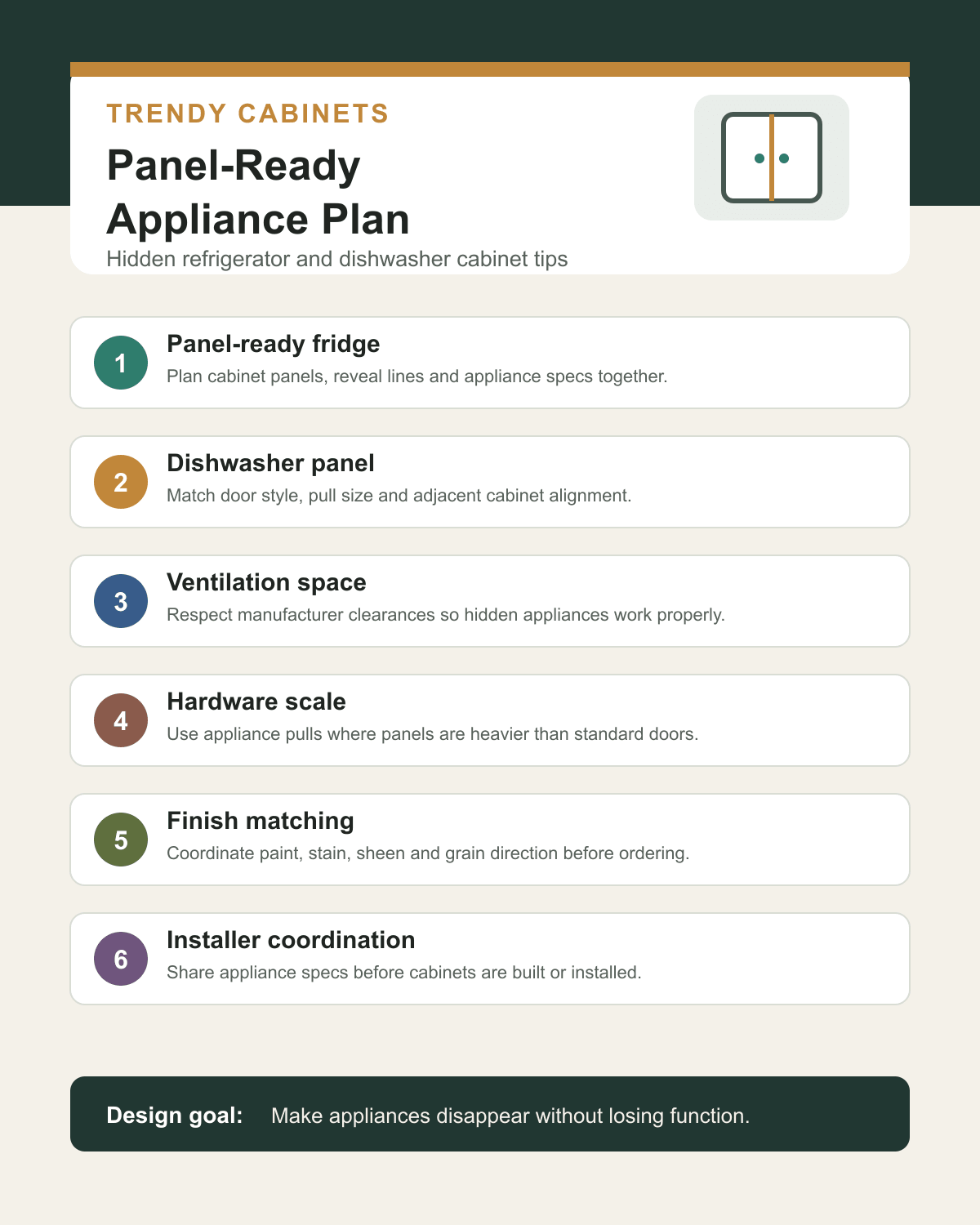
The idea sounds simple: add cabinet panels to appliances. In practice, it requires careful planning. The appliance model, cabinet line, panel thickness, reveal lines, hardware, ventilation, installation sequence and finish matching all need to work together. If those details are not handled early, the result can look uneven, operate poorly or cost more to correct later.
This guide explains how to plan panel-ready appliance cabinets in Atlanta kitchens, including hidden refrigerator panels, dishwasher panels, freezer columns, appliance pulls, ventilation needs, finish matching, design mistakes and when panel-ready appliances are worth considering.

What Are Panel-Ready Appliances?
Panel-ready appliances are designed to accept custom cabinet panels on the front. The most common examples are refrigerators, freezer columns, dishwashers and undercounter beverage refrigerators. Instead of showing a standard appliance finish, the front of the appliance can match nearby cabinets.
This approach is especially popular in luxury kitchens and open-concept homes because it reduces visual clutter. A large refrigerator can blend into a pantry wall. A dishwasher can disappear next to the sink base. A beverage refrigerator can sit under a coffee bar or bar cabinet without breaking the cabinet design. The result is a kitchen that feels more like built-in millwork and less like a row of appliances.
Panel-ready does not mean every appliance becomes invisible without effort. It means the appliance is built to receive a panel. The cabinet designer, appliance supplier and installer still need to coordinate the size, weight, hinge system, handle placement and clearances.
Panel-Ready Appliance Planning at a Glance
| Planning detail | Why it matters | What to confirm early |
|---|---|---|
| Appliance model | Each appliance has unique panel requirements | Width, height, depth, hinge type and panel specs. |
| Cabinet panel size | Panels must align with surrounding doors | Reveal lines, top alignment and bottom clearance. |
| Panel weight | Heavy panels need proper hardware support | Manufacturer maximum panel weight and pull type. |
| Ventilation | Hidden appliances still need airflow | Toe-kick, top, side or rear clearance requirements. |
| Hardware | Appliance panels need stronger pulls | Appliance pull size, placement and finish. |
| Finish matching | Panels should match the cabinet run | Paint, stain, sheen, grain direction and touch-up plan. |
Why Atlanta Homeowners Choose Hidden Appliances
Many Atlanta kitchens open into family rooms, breakfast areas or dining spaces. In these layouts, appliances are visible from more than one angle. A panel-ready refrigerator can keep a pantry wall looking clean. A panel-ready dishwasher can reduce visual interruption near the sink. An integrated beverage fridge can support entertaining without making the kitchen feel commercial.
Hidden appliances also support luxury design. When a refrigerator, freezer or dishwasher blends into the cabinetry, the cabinet finish, hardware and countertop become the visual focus. This can make a kitchen feel more custom and less appliance-driven. The effect is especially strong in kitchens with inset cabinetry, frameless cabinets, walnut or white oak finishes, or full-height pantry walls.
There is also a practical benefit. Panel-ready appliances can help define zones. A refrigerator column can become part of a tall storage wall. A dishwasher can disappear into the cleanup zone. A beverage refrigerator can support a coffee bar, bar cabinet or secondary drink station. The appliance still works hard, but it does not visually dominate the room.
Panel-Ready Refrigerators and Freezer Columns
Refrigerators are the most visible panel-ready appliances because they are large. A standard stainless refrigerator can become a major visual block in an otherwise refined kitchen. Panel-ready refrigerators and freezer columns can help the appliance blend into a wall of tall cabinetry.
The planning must start with the appliance model. Built-in refrigerator columns, integrated refrigerator/freezer pairs and panel-ready French door refrigerators all have different requirements. Panel dimensions, hinge clearances, ventilation needs and handle placement vary by manufacturer. The cabinet design should not be finalized until the exact appliance specifications are known.
Refrigerator panels also need the right hardware. Standard cabinet pulls may look too small or feel weak on a large appliance door. Appliance pulls are usually longer and stronger. Their scale should match the height and weight of the panel while coordinating with the rest of the kitchen hardware.
Panel-Ready Dishwasher Cabinets
A panel-ready dishwasher can make the cleanup zone look cleaner. Instead of a stainless face interrupting the lower cabinet run, the dishwasher front can match the adjacent cabinet doors or drawers. This is especially useful when the dishwasher sits in a visible island, an open kitchen, or a long run of painted or wood cabinetry.
Dishwasher panel planning is more precise than many homeowners expect. The panel must clear the toe kick, open fully, align with surrounding cabinet fronts and stay within appliance weight limits. Handle placement matters too. A pull that looks good on a cabinet drawer may not be comfortable or strong enough for a dishwasher panel.
If the dishwasher sits next to a sink base, trash pull-out or drawer stack, the surrounding cabinet layout should be drawn carefully. The goal is for the dishwasher to disappear visually while still being easy to open, load and service.
Appliance Panels in Open-Concept Kitchens
Open-concept kitchens are one of the strongest reasons to consider panel-ready appliances. When the kitchen is visible from the living room, appliance faces can interrupt the design. Panel-ready refrigerators and dishwashers help the kitchen read as part of the home’s architecture rather than a purely utilitarian space.
This is especially useful when the kitchen has a large island, a visible pantry wall or a clean perimeter cabinet run. A panel-ready refrigerator can hide within tall storage. A dishwasher panel can keep the island or sink wall looking calm. A beverage refrigerator can support entertaining without adding another stainless rectangle to the room.
For open layout planning, see Trendy Cabinets’ guide to custom kitchen cabinets for open-concept Atlanta homes. Panel-ready appliances fit naturally into that same design goal: keeping the kitchen open, organized and visually connected.
Finish Matching and Cabinet Style
Finish matching is one of the most important details. A panel-ready appliance only looks integrated if the panel matches the surrounding cabinetry. For painted cabinets, the color and sheen should match. For stained wood, grain direction, species, stain tone and finish should be coordinated. For slab or frameless doors, panel alignment and reveal lines become especially important.
Door style matters too. A shaker panel, slab panel, inset panel or raised panel will each create a different effect. The appliance panel should not look like it came from a different cabinet system. It should feel like part of the same design language.
If the kitchen uses two finishes, decide whether the appliance panels should match the tall pantry wall, the perimeter cabinets or the island. In many designs, refrigerator panels match the tall cabinet wall, while dishwashers match the base cabinet run. The best choice depends on visibility and layout.
For deeper finish planning, review luxury kitchen cabinet finishes in Atlanta.
Ventilation and Clearance Requirements
Hidden appliances still need to work properly. Refrigerators, freezers, dishwashers and beverage units may need specific clearances for ventilation, door swing, service access and heat management. These requirements come from the appliance manufacturer and should be respected during cabinet design.
Ignoring ventilation can create performance problems. A refrigerator that does not breathe properly may work harder. A panel that is too heavy can stress hinges. A dishwasher panel that is too low may scrape the floor or toe kick. A beverage refrigerator without the correct clearance may not cool properly.
This is why appliance specifications should be shared before cabinets are ordered. The cabinet designer should not guess. The exact model number, installation guide and panel requirements should be part of the planning package.
Hardware for Panel-Ready Appliances
Appliance hardware needs to be scaled for use. A refrigerator panel is heavier than a standard cabinet door. A dishwasher panel is opened and closed frequently. A freezer column may need a strong pull with comfortable grip. For these reasons, appliance pulls are often larger than standard cabinet pulls.
The hardware finish should coordinate with the rest of the kitchen. Brushed brass, matte black, polished nickel, stainless, bronze and other finishes can all work depending on the cabinet style. The appliance pull does not have to be identical to every other pull, but it should feel intentional.
Placement also matters. Pulls should be comfortable to use and visually aligned with the cabinet design. A poorly placed pull can make a beautiful appliance panel feel awkward. For large panels, mockups or careful drawings can help confirm the right location.
Panel-Ready Appliances and Budget
Panel-ready appliances can increase the total kitchen investment. The appliance itself may cost more than a standard model. The custom panels add cabinet cost. Appliance pulls may be more expensive than standard hardware. Installation may require more coordination. However, for many luxury kitchens, the visual payoff is significant.
The decision should be tied to the homeowner’s goals. If the kitchen is open to the living area, panel-ready appliances may be worth prioritizing. If the refrigerator sits in a hidden corner, the investment may be less important. If the homeowner wants a seamless pantry wall, appliance panels can make the design feel complete.
For a broader cabinet budget overview, see custom cabinet costs in Atlanta.
Common Mistakes to Avoid
One common mistake is choosing appliances after cabinets are designed. This can create panel size conflicts, clearance problems and installation delays. Appliance choices should be made early enough for the cabinet plan to respond to exact specifications.
Another mistake is using hardware that is too small. Appliance panels need pulls that are comfortable and proportional. A small decorative pull may look delicate, but it may not work well on a heavy refrigerator or dishwasher panel.
A third mistake is assuming every appliance should be hidden. Panel-ready appliances are most valuable where visibility matters. A kitchen may need a panel-ready refrigerator and dishwasher but not a panel-ready beverage unit. The design should prioritize the appliances that most affect the room’s appearance.
Finally, homeowners should avoid treating panel-ready appliances as a last-minute upgrade. They are part of the cabinet system and should be planned from the beginning.
Related Cabinet Planning Guides
If you are planning a seamless kitchen design, these Trendy Cabinets guides can help with layout, finish, budget and storage decisions:
- Custom Kitchen Cabinets for Open-Concept Homes in Atlanta
- Luxury Kitchen Cabinet Finishes in Atlanta
- Custom Cabinet Costs in Atlanta
- Inset vs. Frameless vs. Shaker Cabinets in Atlanta
- Built-In Coffee Bar Cabinets in Atlanta
How Trendy Cabinets Can Help
Trendy Cabinets helps Atlanta homeowners plan cabinetry around appliance specifications, finish goals, storage needs and installation details. For panel-ready appliances, the design process should include the appliance model numbers, manufacturer panel requirements, cabinet finish selection, hardware choices and a clear installation plan.
If you are considering hidden refrigerator panels, dishwasher panels or a seamless appliance wall, gather your appliance wish list and inspiration images before the design conversation. Then contact Trendy Cabinets to schedule a consultation and review cabinet options for your kitchen.
Frequently Asked Questions
What does panel-ready appliance mean?
A panel-ready appliance is designed to accept a custom cabinet panel on the front so it can blend with surrounding cabinetry.
Can any refrigerator be made panel-ready?
No. The appliance must be designed for custom panels. Standard refrigerators usually cannot receive cabinet panels in the same integrated way.
Are panel-ready appliances worth it?
Panel-ready appliances can be worth it in luxury kitchens, open-concept layouts and pantry walls where a seamless cabinet appearance is important.
Do panel-ready appliances need special hardware?
Often, yes. Refrigerator, freezer and dishwasher panels may need larger appliance pulls because the panels are heavier and used differently than standard cabinet doors.
When should appliance specs be shared with the cabinet designer?
Appliance specifications should be shared before cabinets are ordered so panel sizes, clearances, ventilation and hardware can be planned correctly.
Final Thoughts
Panel-ready appliance cabinets can make a kitchen feel more refined, seamless and custom. They are especially valuable in open-concept Atlanta homes, luxury kitchens and designs where the cabinet finish should be the main visual feature.
The key is early coordination. Choose appliance models, review specifications, plan panels, confirm hardware and coordinate installation before cabinets are built. When these steps are handled well, hidden refrigerator and dishwasher panels can make the entire kitchen feel more polished and intentional.