A built-in coffee bar can make a kitchen feel more organized, more personal and more enjoyable every morning. Instead of keeping an espresso machine, grinder, mugs, syrups, filters and small appliances scattered across the main counter, a dedicated cabinet zone gives everything a home. For Atlanta homeowners planning a kitchen remodel, pantry wall, open-concept layout or beverage station, built-in coffee bar cabinets can be one of the most useful upgrades in the entire space.
The best coffee bar is not just a pretty counter with a machine on it. It is a small workflow zone. It needs storage for cups and mugs, space for equipment, hidden outlets, lighting, counter clearance, trash access, water planning if needed, and a finish that works with the rest of the kitchen. It should make daily routines easier while keeping the main kitchen counters cleaner.
This guide explains how to plan built-in coffee bar cabinets in Atlanta homes, including appliance garages, beverage stations, pantry wall integration, hidden storage, cabinet finishes, countertop choices, electrical planning and layout mistakes to avoid.
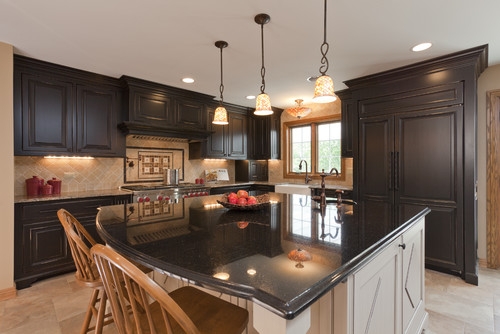
Why Built-In Coffee Bar Cabinets Are So Popular
Coffee routines have become part of the way many homeowners use the kitchen. Some families make quick morning coffee before work. Others use espresso machines, grinders, milk frothers, tea storage, syrups, mugs and specialty appliances every day. Guests may use the coffee station during brunch, holidays or casual entertaining. When all of those items sit on the main kitchen counter, the room can feel cluttered even when the cabinets are beautiful.
A built-in coffee bar solves that problem by creating a dedicated zone. It keeps coffee supplies together, makes the morning routine faster and reduces traffic in the main cooking area. It can also serve as a beverage station with a small refrigerator, wine storage, sparkling water, tea supplies or snack storage. In an open-concept kitchen, this can help guests serve themselves without crowding the cook.
For Atlanta homes with large kitchens, butler’s pantries, walk-in pantries or open family rooms, a coffee bar can become a natural bridge between daily function and luxury design. It is practical enough to use every day and polished enough to feel like a custom feature.
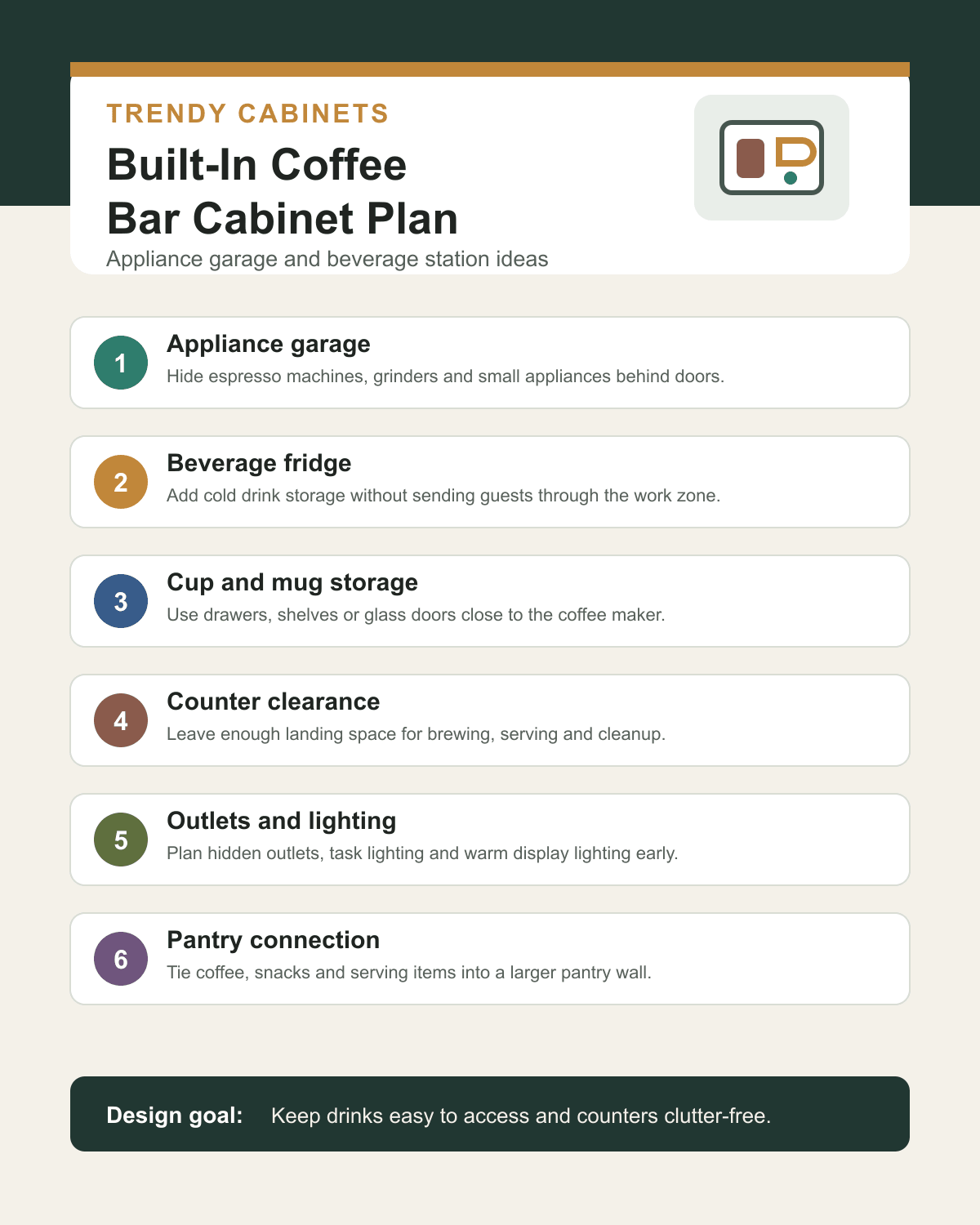
Coffee Bar Cabinet Planning at a Glance
| Feature | Best use | Why it matters |
|---|---|---|
| Appliance garage | Espresso machine, grinder, toaster or blender | Keeps small appliances accessible but hidden when not in use. |
| Beverage fridge | Water, creamers, cold drinks or wine | Creates a self-serve drink zone away from the main refrigerator. |
| Mug drawers or shelves | Cups, mugs, saucers and travel tumblers | Keeps daily coffee items close to the machine. |
| Hidden outlets | Coffee maker, grinder, kettle and chargers | Reduces visible cords and supports a cleaner cabinet design. |
| Task lighting | Morning routines and evening beverage service | Makes the station easier to use and more inviting. |
| Pantry connection | Snacks, tea, breakfast items and serving pieces | Turns the coffee bar into a broader daily-use storage zone. |
Choose the Right Location
The location of the coffee bar determines how well it works. The station should be easy to reach in the morning, but it should not block the main cooking zone. If the household uses the coffee maker while someone else prepares breakfast, the coffee bar should not compete with the range, sink, dishwasher or main prep area.
Common locations include a pantry wall, a butler’s pantry, a recessed cabinet run, a side wall near the refrigerator, a breakfast area, a wet bar zone or a cabinet section just outside the main work triangle. In open-concept kitchens, a coffee bar near the edge of the kitchen can let guests access drinks without walking into the cooking area.
Water access may also affect the location. Some coffee bars include a small sink, filtered water, pot filler-style water access or an undercounter beverage refrigerator. Others are dry stations that only need outlets and storage. Both can work, but the cabinet plan should be realistic about plumbing, electrical and daily movement.
Appliance Garage Ideas
An appliance garage is one of the most useful features for a coffee bar. It allows the homeowner to keep an espresso machine, drip coffee maker, grinder, kettle, blender or toaster accessible without leaving every appliance fully visible. Doors can lift up, slide back, pocket into the cabinet or open like standard doors depending on the available space and cabinet line.
The appliance garage should be sized around real appliances. Espresso machines can be tall. Grinders may need clearance above. Coffee makers may need room for water reservoirs. A toaster oven needs ventilation and heat clearance. If the cabinet is designed from standard assumptions instead of actual equipment, the station may look good but function poorly.
Interior outlets are important. The goal is to avoid cords running across the counter or out of the cabinet. Outlet placement should be planned with the appliance layout. Lighting inside or above the appliance garage can also make the station easier to use, especially in a deeper pantry wall.
Beverage Fridge and Cold Storage
A beverage fridge can turn a coffee bar into a more complete beverage station. It can hold creamers, sparkling water, juice, cold brew, wine, soft drinks or guest beverages. This is especially useful in open kitchens where guests gather near the island or family room.
Placement matters. A beverage refrigerator should be accessible without blocking the main cooking path. It also needs ventilation and proper cabinet sizing. If it sits below the coffee counter, the homeowner can keep cold items close to the beverage prep zone. If it sits near a pantry wall, it can support snacks, breakfast and entertaining.
Not every coffee bar needs a beverage fridge. Smaller homes may benefit more from drawer storage or a compact appliance garage. The best choice depends on how the family entertains, how much cold drink storage is needed and whether the main refrigerator is already convenient.
Mug, Cup and Travel Tumbler Storage
Cups and mugs should live close to the coffee maker. This seems simple, but it is often overlooked. If mugs are across the kitchen, the coffee routine becomes more complicated than it needs to be. Built-in coffee bar cabinets can include drawers, glass doors, open shelves, vertical dividers or display cabinets for cups and serving items.
Drawers work well for travel tumblers, lids and daily mugs. Shelves work well for attractive mugs or glassware. Glass doors can make the station feel more finished while keeping items visible. Open shelves can look warm and casual, but they require more upkeep because everything stays visible.
Think about the actual collection. Some households have matching mugs. Others have oversized mugs, kids’ cups, travel tumblers, tea tins and accessories. The cabinet design should fit the real items instead of assuming everything is the same size.
Countertop Space and Landing Area
A coffee bar needs enough counter space to work. A machine alone is not enough. There should be room to set down a mug, pour milk, add sugar, prep tea, serve drinks or clean up. If the station is too narrow, it becomes frustrating even if it looks beautiful.
Countertop material should also match the use. Quartz is popular because it is durable and easy to clean. Natural stone can look beautiful but may require more maintenance depending on the material. Wood can add warmth, but spills and moisture need to be considered. Since coffee bars involve water, heat, stains and daily use, maintenance expectations matter.
If the coffee bar is part of a larger kitchen remodel, the countertop can match the main kitchen or use a complementary surface. A different counter material can make the station feel special, but it should still connect with the rest of the room.
Pantry Wall Integration
One of the strongest locations for a coffee bar is inside a pantry wall. Tall cabinets can hold food storage, small appliances, breakfast items, snacks and serving pieces. The coffee bar can sit in the middle as an open or hidden work zone. This creates a daily-use hub that keeps the main kitchen counters clearer.
A pantry wall coffee bar can include pocket doors, appliance garage doors, roll-out trays, drawers, adjustable shelves, glass doors, lighting and an undercounter beverage refrigerator. When closed, the wall can look clean and architectural. When open, it becomes a functional station for coffee, tea, snacks or entertaining.
For more pantry storage ideas, see Trendy Cabinets’ guide to pantry cabinets in Roswell GA. Many tall cabinet ideas apply directly to coffee bar and beverage station planning.
Designing for Open-Concept Kitchens
In open-concept kitchens, a coffee bar can reduce traffic and clutter. Guests can get drinks without entering the cooking zone. Family members can make coffee while someone else uses the island. Small appliances can be hidden so the kitchen looks calm from the living room.
The station should coordinate with the rest of the cabinetry. If the kitchen has white perimeter cabinets and a walnut island, the coffee bar might use walnut accents or matching hardware. If the kitchen is modern and frameless, the coffee bar should not suddenly feel traditional unless it is intentionally designed as a furniture-style feature.
The guide to custom kitchen cabinets for open-concept Atlanta homes explains how island storage, pantry walls and sightlines work together. A coffee bar is one of the most useful specialty zones within that larger open-concept plan.
Finishes and Hardware
A built-in coffee bar can match the main kitchen or use a complementary finish. Matching the main cabinets creates a seamless look. Using a different finish can make the station feel like a custom feature. Walnut, white oak, deep green, navy, warm white, charcoal and matte painted finishes can all work depending on the home.
Hardware should support both function and style. Tall doors may need longer pulls. Drawers should be easy to open during daily routines. Appliance garage doors may require specific hardware or mechanisms. If the station includes glass doors or display shelves, hardware should feel proportional and refined.
For more finish guidance, see luxury kitchen cabinet finishes in Atlanta. Coffee bars often benefit from the same finish principles as luxury kitchens: warm materials, coordinated hardware and careful lighting.
Lighting and Electrical Planning
Electrical planning should happen early. Coffee makers, espresso machines, grinders, kettles, frothers and beverage refrigerators all need power. If outlets are added late, cords may become visible or the station may not function as planned. Hidden outlets, under-cabinet outlets or outlets inside appliance garages can keep the design cleaner.
Lighting makes the station easier to use and more attractive. Under-cabinet lighting can brighten the counter. Interior lighting can make glass cabinets or display shelves feel premium. Warm lighting can make a morning coffee station feel inviting. If the coffee bar is in a pantry wall, lighting becomes even more important because deep cabinetry can create shadows.
If a sink or water line is included, plumbing should also be coordinated early. The cabinet design may need space for pipes, filters or shutoff access. A dry coffee bar is simpler, but a wet coffee bar can be useful for homeowners who want a more complete beverage station.
Related Cabinet Planning Guides
If you are planning a coffee bar, these related Trendy Cabinets guides can help with layout, finishes, storage and budget decisions:
- Custom Kitchen Cabinets for Open-Concept Homes in Atlanta
- Pantry Cabinets in Roswell GA
- Luxury Kitchen Cabinet Finishes in Atlanta
- Custom Cabinet Costs in Atlanta
- Inset vs. Frameless vs. Shaker Cabinets in Atlanta
How Trendy Cabinets Can Help
Trendy Cabinets helps homeowners design custom cabinet zones that support real daily routines. A built-in coffee bar may be part of a full kitchen remodel, a pantry wall, a bar area, a breakfast station or an open-concept storage plan. The right approach depends on the room, the appliances, the storage needs and the way the family uses the kitchen.
If you are planning built-in coffee bar cabinets in Atlanta or nearby communities, gather a few details before the design conversation: appliance dimensions, preferred coffee routine, mug and cup storage needs, beverage fridge plans, inspiration photos and any plumbing or outlet goals. Then contact Trendy Cabinets to schedule a consultation.
Frequently Asked Questions
What is a built-in coffee bar cabinet?
A built-in coffee bar cabinet is a dedicated cabinet zone for coffee equipment, mugs, supplies, small appliances and sometimes beverage refrigeration or water access.
Can a coffee bar be hidden behind cabinet doors?
Yes. Appliance garages, pocket doors and tall pantry cabinets can hide coffee equipment when it is not being used while keeping it easy to access every day.
Where should a coffee bar go in a kitchen?
A coffee bar works well in a pantry wall, butler’s pantry, side cabinet run, beverage station or near the edge of an open kitchen where it does not block cooking traffic.
Does a built-in coffee bar need plumbing?
No. Many built-in coffee bars are dry stations with outlets and storage only. Plumbing is optional if the homeowner wants a sink, filtered water or a more complete beverage station.
What should be stored in a coffee bar cabinet?
Common coffee bar storage includes mugs, travel tumblers, coffee beans, filters, syrups, tea, sweeteners, small appliances, napkins, spoons and beverage accessories.
Final Thoughts
A built-in coffee bar can make the kitchen easier to use and easier to keep clean. By giving coffee equipment, cups, drinks and small appliances a dedicated home, the main counters stay calmer and the morning routine becomes smoother.
For Atlanta homeowners, the best coffee bar cabinet plan starts with real habits. Think about what you use every day, where guests gather, whether cold storage is needed and how visible the station will be from nearby rooms. With thoughtful custom cabinetry, a coffee bar can become one of the most useful and enjoyable features in the home.