A mudroom can make the busiest part of the home feel easier to manage. Shoes, backpacks, jackets, pet leashes, sports gear, reusable bags, cleaning supplies and daily clutter all need a place to land. Without a plan, those items collect near the garage door, kitchen island, laundry room or hallway. With custom mudroom cabinets, the entry area can become organized, attractive and much easier to reset.
For Atlanta homeowners, mudroom cabinetry is especially useful in family homes, open-concept layouts, homes with garage entries, laundry-room pass-throughs and houses where the kitchen is the main traffic hub. A custom mudroom can act as a drop zone, shoe storage area, locker wall, bench, cleaning supply cabinet and family command center all in one.
This guide explains how to plan custom mudroom cabinets in Atlanta, including bench seating, locker storage, closed cabinets, shoe drawers, hooks, cubbies, durable finishes, lighting, laundry room connections and common design mistakes to avoid.
Why Mudroom Cabinets Matter
Mudrooms work because they give daily items a defined home. A kitchen is not the best place for backpacks, shoes and sports gear. A hallway is not the best place for cleaning supplies and pet items. A laundry room can help, but only if the storage is planned around real routines. Custom mudroom cabinets solve this by creating zones for the items that move in and out of the house every day.
The value is not only visual. A mudroom makes mornings easier, protects the main living areas from clutter and helps the home recover quickly after school, work, errands or weekend activities. When every person has a hook, cubby, drawer or cabinet, the whole household can use the space without needing a complicated system.
In many Atlanta homes, the mudroom sits near the garage entry or laundry room. That makes it a natural place for shoes, coats, sports uniforms, pet towels and reusable bags. When the space is designed well, it supports the entire home instead of becoming another crowded pass-through.
Mudroom Cabinet Features at a Glance
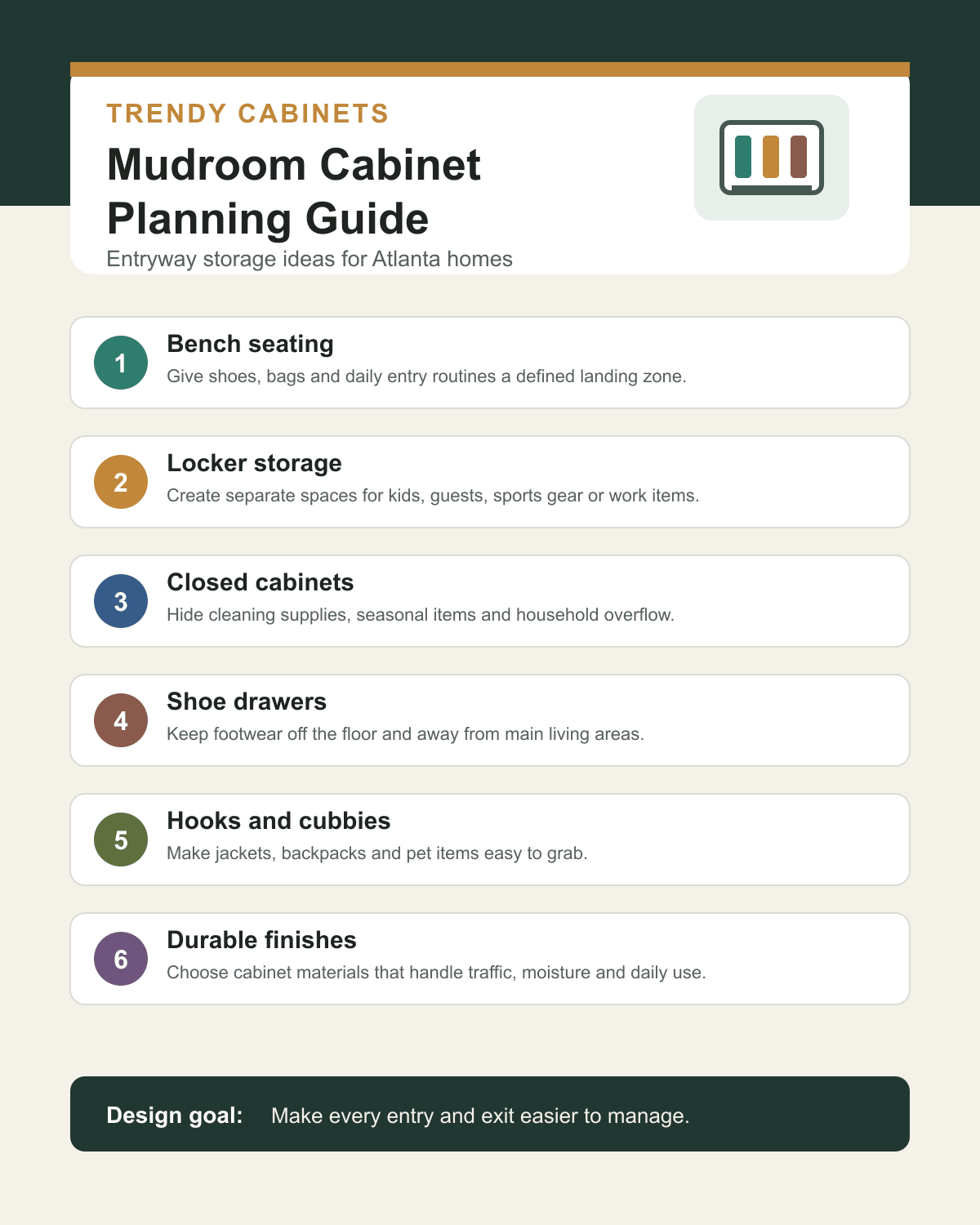
| Feature | Best use | Why it helps |
|---|---|---|
| Bench seating | Putting on shoes, setting bags down | Creates a practical landing zone near the entry. |
| Locker cabinets | Kids, guests, sports gear and work items | Gives each person a defined storage space. |
| Closed cabinets | Cleaning supplies, seasonal items, paper goods | Hides clutter and keeps visible areas calmer. |
| Shoe drawers | Everyday footwear and boots | Keeps shoes off the floor and out of traffic paths. |
| Hooks and cubbies | Jackets, backpacks, pet leashes and hats | Makes frequently used items easy to grab. |
| Durable finishes | High-traffic family entries | Handles moisture, scuffs and daily use better. |
Start With the Entry Routine
The best mudroom design starts with how the household enters and exits the home. Some families come through the garage every day. Others use a side door, laundry room or back entry. Some need sports storage. Others need pet storage, stroller space, cleaning supplies or a place for work bags. The cabinet layout should follow those habits.
Before choosing cabinet finishes, list what the mudroom needs to hold. The list may include shoes, boots, jackets, backpacks, lunch bags, umbrellas, dog leashes, towels, sports gear, reusable bags, hats, gloves, seasonal items, paper towels, cleaning supplies and batteries. Once those categories are clear, it becomes easier to decide between lockers, drawers, cubbies, tall cabinets and open hooks.
A mudroom should be easy to use quickly. If the system is too complicated, the family will not use it. Open hooks may work better than closed doors for daily jackets. Shoe drawers may be better than open shelves if visual clutter is the problem. Tall cabinets may be better for cleaning supplies and seasonal overflow. The best design balances access and concealment.
Bench Seating and Shoe Storage
A bench is one of the most useful mudroom features. It gives people a place to sit while putting on shoes, set down bags, or pause while entering the home. It also creates a natural storage opportunity below the seat. Drawers, open cubbies or pull-out bins can hold shoes and boots without taking over the floor.
Shoe storage should be sized around the household’s real footwear. Kids’ shoes, adult sneakers, boots and sandals all need different clearances. If the cabinet is designed without measuring what will actually be stored, the mudroom may look good but fail in daily use.
Open shoe cubbies are easy to use, but they show clutter. Drawers hide shoes, but they require more space and hardware. A hybrid approach often works well: daily shoes in accessible cubbies, seasonal shoes in closed drawers or cabinets, and taller boot storage in a side cabinet.
Locker Cabinets for Families
Locker-style mudroom cabinets are popular because they give each person a defined zone. One locker might include hooks, an upper cubby, a lower shoe drawer and a small shelf. This works well for families with kids, sports gear or school routines. It also works for guests if the mudroom is near the main entry.
Lockers can be open, closed or partially closed. Open lockers are easy to use and encourage quick drop-off. Closed lockers look cleaner but may be less convenient for items used several times a day. A partial design can include open hooks with closed cabinets above or below.
Spacing matters. Hooks should not be so close together that bags and jackets overlap constantly. Upper cubbies should be reachable. Lower drawers should open without blocking the walkway. A locker wall should support the traffic flow instead of narrowing the entry.
Closed Cabinets for Clutter Control
Not every mudroom item should be visible. Cleaning supplies, extra paper goods, pet food, seasonal accessories, batteries and household overflow usually work better behind closed doors. Closed cabinets keep the mudroom from feeling messy even when it is holding a lot.
Tall cabinets are especially useful. They can hold brooms, mops, vacuums, umbrellas, sports equipment or bulk supplies. Adjustable shelves make the cabinet more flexible over time. If pet items are part of the plan, a lower cabinet or drawer can store leashes, towels, grooming supplies and food containers.
Closed storage should be placed where it will not interrupt the main entry path. A tall cabinet near the end of the run can frame the mudroom while leaving the bench and hooks easy to access.
Durable Finishes for Atlanta Mudrooms
Mudroom cabinets need finishes that can handle traffic. Shoes, bags, jackets, moisture, pet items and daily use all create wear. A finish that works beautifully in a formal room may not be practical near a garage entry. Durability should be part of the finish conversation from the start.
Painted cabinets can work well when the finish quality is strong. Medium tones, muted greens, warm grays, navy, charcoal and wood finishes can hide wear better than very bright whites in some homes. Wood tones can add warmth and make the mudroom feel more connected to the rest of the home.
Hardware should also be practical. Hooks, pulls and knobs should be easy to grip. A mudroom is a working space, so delicate hardware may not be the best choice for drawers and tall doors. The finish can still feel refined while being durable enough for daily use.
Connecting the Mudroom to the Laundry Room
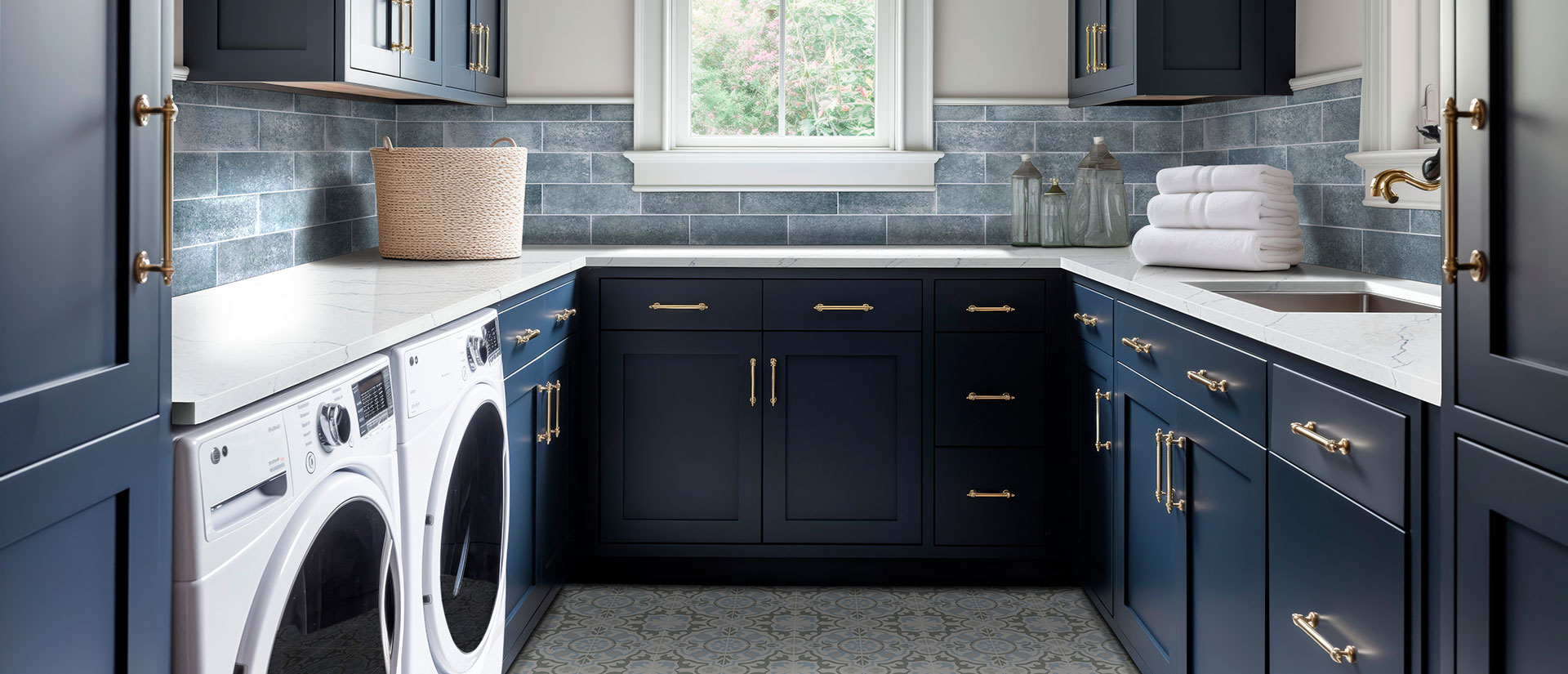
Many mudrooms connect naturally with laundry rooms. This is useful because the two spaces often handle similar categories: towels, uniforms, cleaning supplies, pet items and everyday overflow. A combined laundry and mudroom cabinet plan can create a strong family utility zone.
If the mudroom shares space with the laundry room, the cabinet layout should protect appliance clearances. Washer and dryer doors need room to open. Laundry baskets need landing space. A bench or locker wall should not crowd the laundry workflow. The goal is to make both functions better, not let one overtake the other.
For more laundry-specific storage ideas, see Laundry Room Cabinets in Cumming GA. Many laundry cabinet principles apply directly to mudroom planning.
Open-Concept Homes and Mudroom Clutter
Open-concept homes make mudroom planning more important because clutter travels visually. If the garage entry leads toward the kitchen or family room, shoes and bags can quickly affect the look of the main living space. A mudroom cabinet system acts as a buffer between daily mess and the rest of the home.
In open layouts, the mudroom finish should coordinate with nearby cabinetry. It does not have to match the kitchen exactly, but it should feel related. A white oak accent, warm neutral finish, matching hardware or repeated door style can connect the spaces.
For broader open-layout cabinet planning, see Custom Kitchen Cabinets for Open-Concept Homes in Atlanta.
Common Mudroom Cabinet Mistakes
One common mistake is designing too much open storage. Open hooks and cubbies are useful, but if everything is visible, the mudroom can still look cluttered. A mix of open and closed storage usually works better.
Another mistake is forgetting shoe dimensions. A row of shallow cubbies may not fit boots or larger shoes. A beautiful bench can become frustrating if the drawers below are too small for real footwear.
A third mistake is making the walkway too narrow. Mudrooms are traffic zones. Cabinet doors, drawers, hooks and benches should be planned around movement. If two people cannot pass through comfortably, the space may feel crowded every day.
Finally, some homeowners choose finishes without thinking about wear. A mudroom needs beauty, but it also needs resilience. Finish, hardware and countertop or bench materials should be chosen for real life.
Related Cabinet Planning Guides
If you are planning custom mudroom cabinets, these Trendy Cabinets guides can help with storage, finishes and whole-home cabinet planning:
- Laundry Room Cabinets in Cumming GA
- Pantry Cabinets in Roswell GA
- Custom Kitchen Cabinets for Open-Concept Homes in Atlanta
- Luxury Kitchen Cabinet Finishes in Atlanta
- High End Cabinets Atlanta
How Trendy Cabinets Can Help
Trendy Cabinets helps Atlanta-area homeowners plan custom cabinet systems for kitchens, laundry rooms, pantry walls, mudrooms, coffee bars and specialty storage areas. A mudroom project may be smaller than a full kitchen remodel, but it still benefits from careful measurements, finish planning and storage design.
If you are planning custom mudroom cabinets in Atlanta, start by listing what currently collects near the entry. Then think about who uses the space, how often, and what needs to be visible versus hidden. To begin, contact Trendy Cabinets and schedule a consultation.
Frequently Asked Questions
What are custom mudroom cabinets?
Custom mudroom cabinets are built-in storage systems for entry areas, usually including benches, lockers, hooks, shoe storage, closed cabinets and family drop zones.
Where should a mudroom be located?
A mudroom works best near the entry used most often, such as a garage door, side entrance, laundry room pass-through or back entry.
Are open cubbies or closed cabinets better for mudrooms?
Most mudrooms work best with both. Open cubbies and hooks are easy to use daily, while closed cabinets hide clutter, cleaning supplies and seasonal items.
What finish is best for mudroom cabinets?
Durable painted finishes, wood tones and medium colors often work well because mudrooms handle shoes, bags, moisture and daily traffic.
Can a laundry room also be a mudroom?
Yes. A laundry room can also function as a mudroom when the cabinet plan protects appliance clearances and includes storage for shoes, jackets, bags and utility items.
Final Thoughts
Custom mudroom cabinets can make an Atlanta home feel more organized from the moment people walk in. With the right bench, lockers, shoe storage, hooks, closed cabinets and durable finishes, the entry becomes a practical support system for daily life.
The best mudroom cabinet plan is simple to use, easy to maintain and connected to the rest of the home. When the storage matches real routines, the space can stay cleaner, work harder and make every entry and exit feel a little easier.